


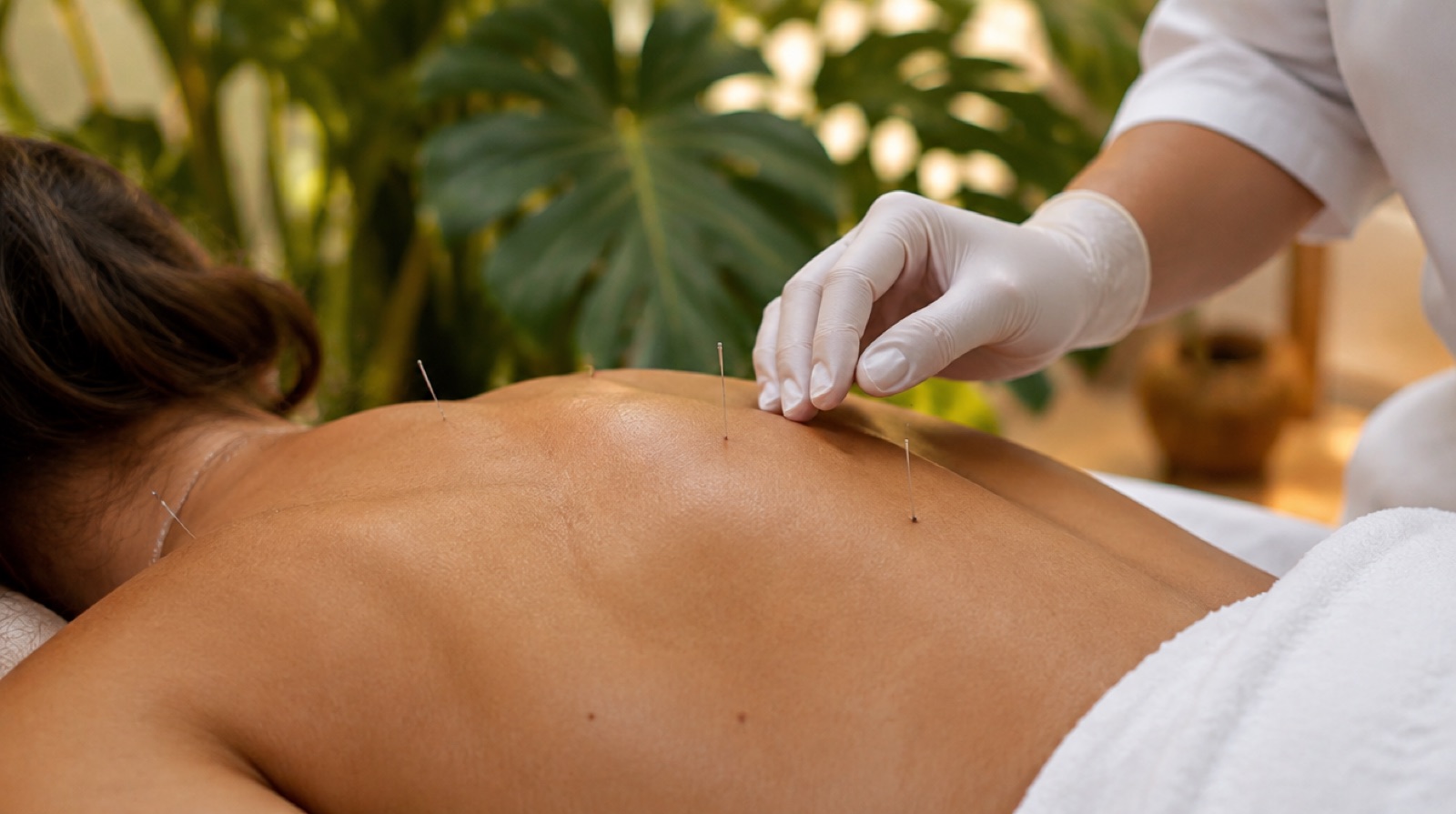
Acupuncture in Honolulu is most often used for back pain, sciatica, neck and shoulder pain, migraines, stress, and nerve pain, and most people need a series of sessions rather than a single visit. A common starting plan is one session a week for about 4 to 8 weeks, followed by a reassessment. At Hawaii Natural Medicine in downtown Honolulu, acupuncture is provided by Phi-Lan Nguyen, LAc, a licensed acupuncturist with a Master of Science in Acupuncture and Oriental Medicine from Bastyr University. She has more than 1,350 clinical hours, including hospital externships in Shanghai, China.
The short answer
- Acupuncture has the strongest evidence for chronic pain. Clinical guidelines include it as an option for chronic low back pain, and research supports it for tension headaches and migraine prevention.
- Expect a series of treatments. Many people notice a change within the first 3 to 6 sessions. Chronic problems usually need more visits than recent ones.
- It is gentle. The needles are ultra fine, much thinner than a needle used for a shot, and most people feel only a brief tingle or dull ache followed by deep relaxation.
- Choose a licensed acupuncturist (LAc). In Hawaii, acupuncturists are licensed by the state. Look for the LAc credential and training that matches your condition.
What is acupuncture good for?
Acupuncture uses thin, sterile needles placed at specific points to calm the nervous system, improve circulation, reduce inflammation, and trigger the release of endorphins, the body's natural pain relievers. At Hawaii Natural Medicine, the most common reasons people book acupuncture include:
- Back pain, hip pain, and sciatica, including radiating leg pain from nerve compression
- Neck pain, shoulder pain, frozen shoulder, and rotator cuff problems
- Headaches and migraines
- TMJ dysfunction and jaw tension
- Tennis elbow, golfer's elbow, and carpal tunnel
- Knee pain
- Recovery after surgery, trauma, or auto accidents
- Stress, anxiety, poor sleep, and fatigue
Phi-Lan Nguyen also has a special focus on neurological conditions, including stroke recovery, Bell's palsy, traumatic brain injury, nerve pain and impingement, multiple sclerosis, Parkinson's disease, and Ramsay Hunt syndrome. Her interest in this area is personal. She watched acupuncture help her mother keep improving years after a severe stroke, long after her family was told progress would stop.
Does acupuncture actually work?
For several conditions, the research is encouraging:
- Chronic low back pain: The American College of Physicians lists acupuncture among the first non-drug treatments to try for chronic low back pain.
- Migraine and tension headaches: Systematic reviews have found that a course of acupuncture can reduce how often headaches happen.
- Neck, knee, and other chronic musculoskeletal pain: Large analyses of clinical trials show acupuncture performs better than no treatment and modestly better than sham acupuncture.
Results vary from person to person, and acupuncture works best as part of a plan. That is why the clinic often pairs it with massage therapy, shockwave therapy, or regenerative treatments for sports injuries when that makes sense for you.
How many acupuncture sessions do you need?
The honest answer depends on what you are treating and how long you have had it. As a general guide:
- Recent injury or flare up: often 3 to 6 sessions
- Chronic back pain, sciatica, or neck pain: commonly 6 to 12 sessions, usually once or twice a week at first
- Migraine prevention: a course of weekly sessions over 6 to 12 weeks is typical in studies
- Stress, sleep, and anxiety: many people notice changes within a few sessions and then come in for maintenance
- Neurological recovery: usually a longer, ongoing plan
Your acupuncturist should reassess you after the first few visits. If you are not seeing any change, the plan should be adjusted.
What to expect at your first visit
- Intake: A conversation about your symptoms, health history, sleep, stress, and goals.
- Treatment: You rest comfortably while ultra fine needles are placed. They usually stay in for about 20 to 30 minutes. Cupping may be added for tight muscles and fascia.
- After: Most people feel relaxed. Mild soreness at a needle point is possible and fades quickly. You can return to normal activities the same day.
- Plan: You will leave with a recommended number of sessions plus nutrition and lifestyle guidance.
How to choose the best acupuncturist in Honolulu
- Confirm a current Hawaii acupuncture license (LAc).
- Ask about their experience with your specific condition.
- Ask how they measure progress and when they reassess.
- Consider a clinic where acupuncture is part of a wider integrative team, so your plan can include other therapies if you need them.
Frequently asked questions
Does acupuncture hurt?
Most people feel very little. Acupuncture needles are hair thin, and the usual sensation is a brief pinch, tingle, warmth, or dull ache that settles within seconds. Many patients fall asleep during treatment.
Does acupuncture work for sciatica?
Acupuncture is commonly used for sciatica and other nerve related leg pain, and clinical studies suggest it can reduce pain and improve function for many people. A series of sessions combined with movement and soft tissue work usually gives the best results.
Is acupuncture covered by insurance in Hawaii?
Some Hawaii health plans include acupuncture benefits and others do not. Check with your insurer and call the clinic to ask what payment options are available.
How long does an acupuncture session take?
Plan for about 60 minutes for a first visit, including the intake. Follow up visits are usually shorter.
Where can I get acupuncture in downtown Honolulu?
Hawaii Natural Medicine is at 1188 Bishop Street, Suite 1605, Honolulu, HI 96813. Call (808) 524-8715 or book online.